
Frequently Asked Questions
Check out our FAQ’s about NZ timber
Got a question? You’re in the right place.
NZTIF gets asked lots of great questions from DIYers, architects, designers, builders and engineers alike. Some of our most popular questions and answers are below. If you can’t find the answer to your question then we’d love to hear from you.
FAQ’s about New Zealand Radiata Pine (NZRP)
-
Radiata pine comprises more than 90% of the volume of timber produced in NZ. It is followed by Douglas fir which accounts for about 4%. Almost all the commercially produced timber in New Zealand is grown from plantation forests that are managed in a sustainable manner to ensure that forestry will continue to be available for generations to come.
-
NZRP is a medium-density coniferous species that has undergone substantial development in its characteristics since being first introduced to the country from California, USA, in the 1930’s. It is a versatile species, with properties that make it ideal for use in construction, millwork and joinery, as well as being preservative treated for resistance to insect and fungal attack in all exposed situations.
-
There are a number of different grades with varying structural properties. Please refer to the Verified Timber website for a description of the properties for the various grades.
-
NZRP has a very even texture and has small differences in density when comparing spring wood and summer wood. This makes it ideal for machining, such as moulding, planing and turning. Comparative tests with other species demonstrate that NZRP is ideal for routing, sanding, finger-jointing, gluing and nail holding.
-
NZRP is not a naturally durable species. However, the sapwood is extremely permeable to wood preservative solutions, making NZRP the most treatable of all species. Total penetration of preservatives ensures that the treated wood can withstand attack by insects and decay in the most extreme hazards.
New Zealand’s timber treatment industry operates at the highest levels of wood preservation quality and verification. Standard specifications for preservative treatment define degrees of hazard to which the wood will be exposed and appropriate levels of preservative treatment are set to enable the treated wood to resist the defined hazards.
-
The even texture of NZRP means that it holds paint and stain to an excellent standard of finish. Oil or water-based stains are accepted to a high level of consistency and evenness, and paint adheres well to a smooth and even finish.
-
Extensive research has been conducted into the drying properties of NZRP. As a result, there is widespread knowledge amongst New Zealand timber producers about kiln drying technology that will achieve the best quality of dry timber for given end uses. Different drying cycles have been developed for structural timbers, for decorative timbers, and for timbers that are to be remanufactured or machined.
-
Visit the New Zealand Timber Preservation Council website to find out more about treating timber to various levels depending on their use and how the Hazard Class system works to determine what treatment level you need for the job.
What are the standard sizes of NZRP?
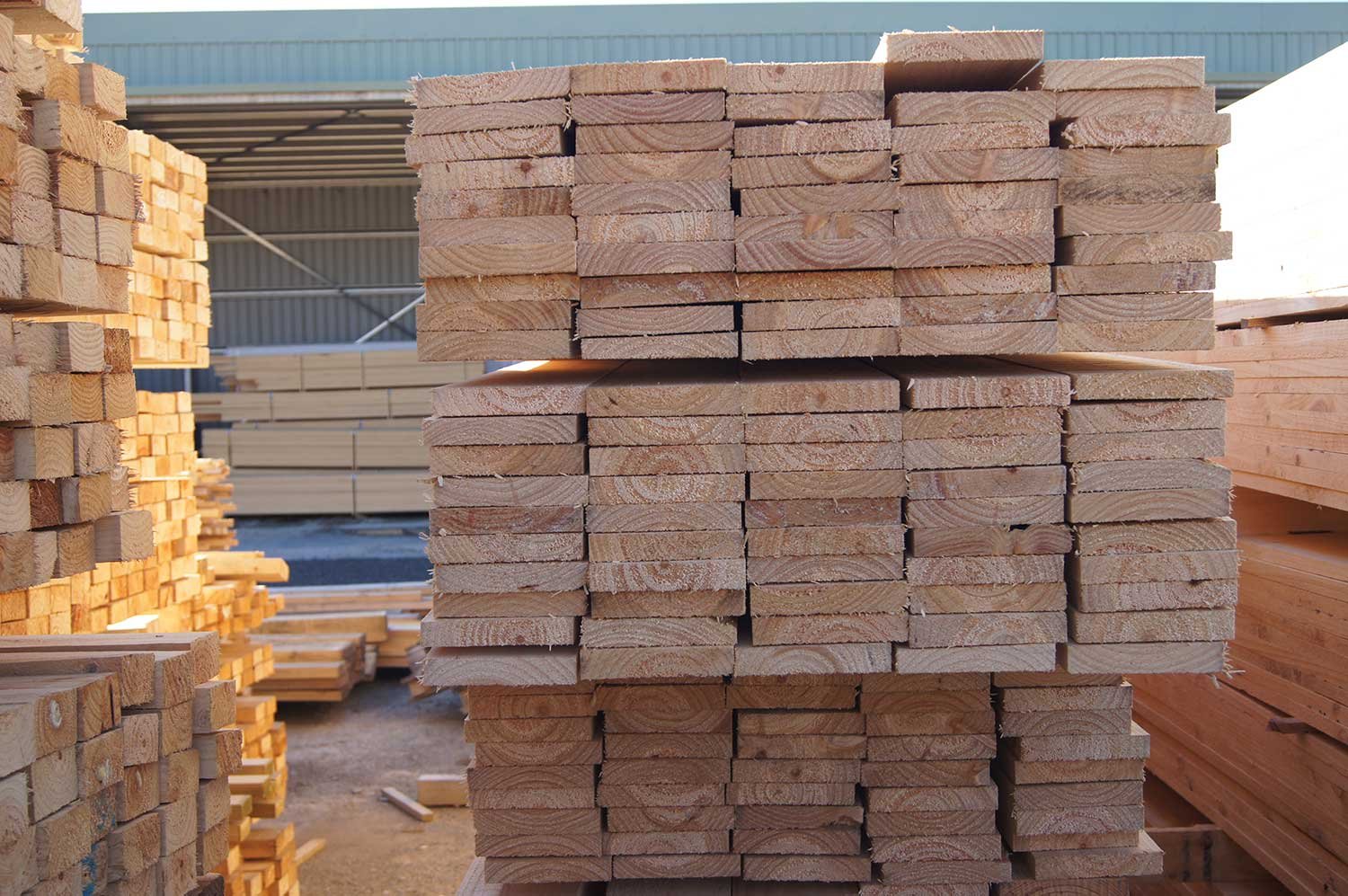
NZRP is sawn to standard dimensions or call sizes. These apply to timber that is sawn and not planed, dressed or dried. Timber that is kiln-dried and planed or dressed are required to meet standard dimensions as in this table (mm);
| Call or Nominal Size (mm) | Dried and Dressed Size (mm) |
|---|---|
| 25 | 19 |
| 30 | 25 |
| 40 | 35 |
| 50 | 45 |
| 75 | 70 |
| 100 | 90 |
| 125 | 120 |
| 150 | 140 |
| 200 | 190 |
| 250 | 240 |
| 300 | 290 |
Standard lengths range from 2.4m to 6.0m in increments of 0.3m, the most common lengths being 4.2m to 6.0m.
Fun facts about NZ Timber
Sawmills seek to maximise the recovery of timber and the most valuable grades of timber from each log through the use of advanced technologies such as thin kerf sawblades, laser scanning and optimisation.
Radiata Pine came to New Zealand from California, USA
Radiata Pine is a native species of the Monterey Peninsula, California. It was first introduced into New Zealand in 1860.
Large-scale plantations were established in the 1930s, following the 1913 Royal Commission recommendations for planting exotic species.
These recommendations came about in recognition that indigenous forests would not last forever and weren’t suitable for plantation forestry.
Today, Radiata Pine forests are grown in all regions of NZ.
Radiata Pine trees have a relatively short harvesting cycle
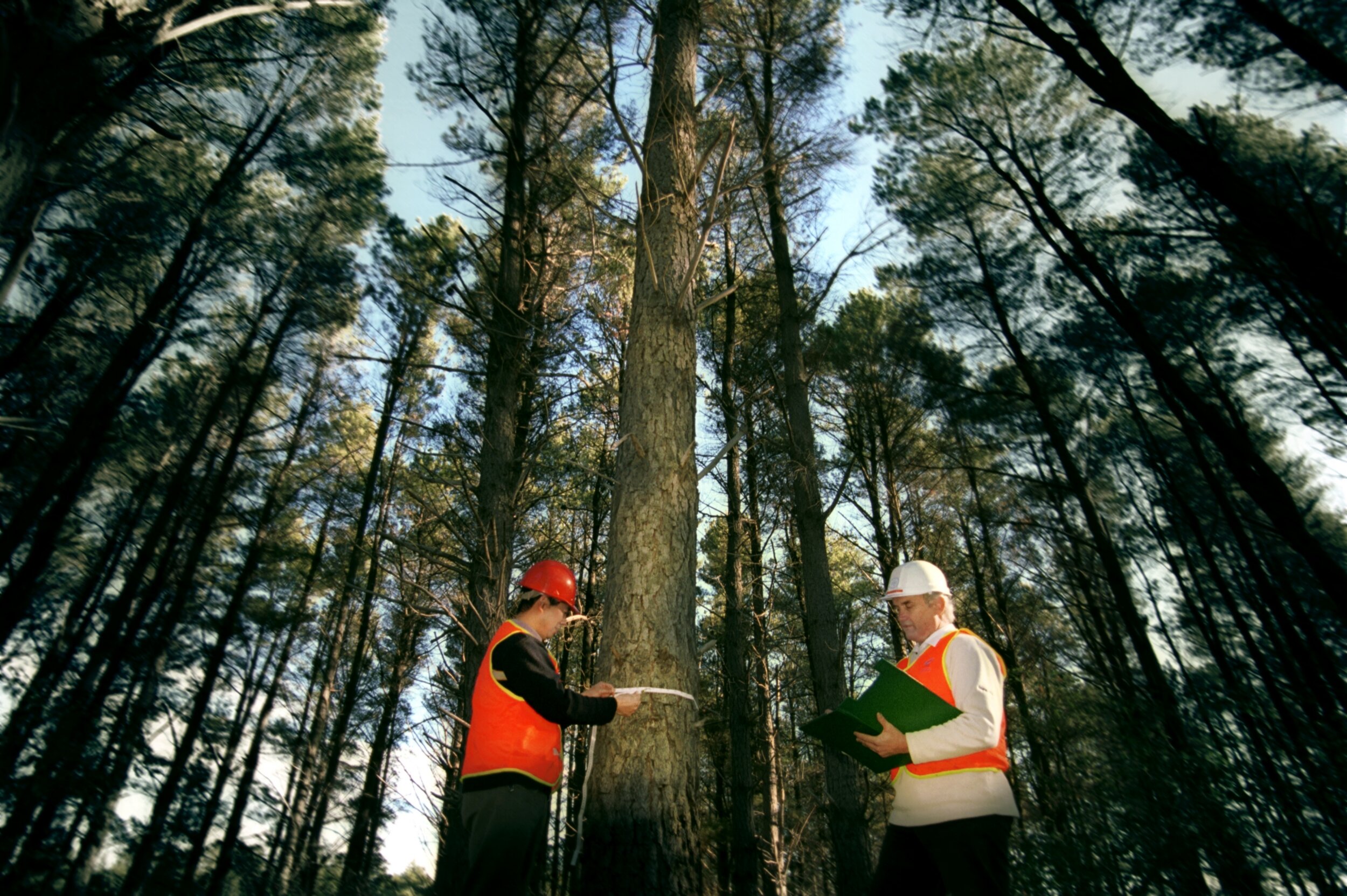
Radiata Pine trees typically reach an age of 26-28 years for harvesting to produce sawn timber.
By comparison, Douglas Fir is ready for harvest at around 50 years.
Radiata Pine is a minor species in terms of world-wide timber use
Radiata Pine is the predominant planted commercial species used in Chile and Australia, as well as in New Zealand.
It is not widely planted in other major forestry regions.
The whole tree is used efficiently in the sawmilling process
Logs that are milled in NZ have diameters from 200mm to 350mm. The amount of timber recovered is around 57% of the log volume. This is used for timber framing for houses, furniture, joinery, packaging and engineered wood products.
The remainder is used to make wood chip, which is used to make ‘pulp and paper’ and reconstituted boards such as Medium Density Fibreboard (MDF) and particle board. MDF is used to make cabinetry and particle board is used for flooring. Left over sawdust is used in kilns to generate heat for use on sawmill sites, in horticultural and livestock applications.
Sawmills use emerging technology to reduce waste
Sawmills seek to maximise the recovery of timber and the most valuable grades of timber from each log.
They do this using advanced technologies such as thin kerf sawblades, laser scanning and digital optimisation tools
Douglas Fir is the second largest plantation forestry species in NZ
Douglas Fir originates from the North American Pacific coast, mainly British Columbia province in Canada, and Washington and Oregon states in USA.
In NZ, Douglas Fir makes up 6% of our plantation forestry, compared with 90% in Radiata Pine.
Douglas Fir forests are mainly located in the Otago and Southland wood supply regions, with lesser stocked areas in the Central North Island and in Canterbury.
Got a Question?
If you can’t find the answer to your question then we’d love to hear from you.